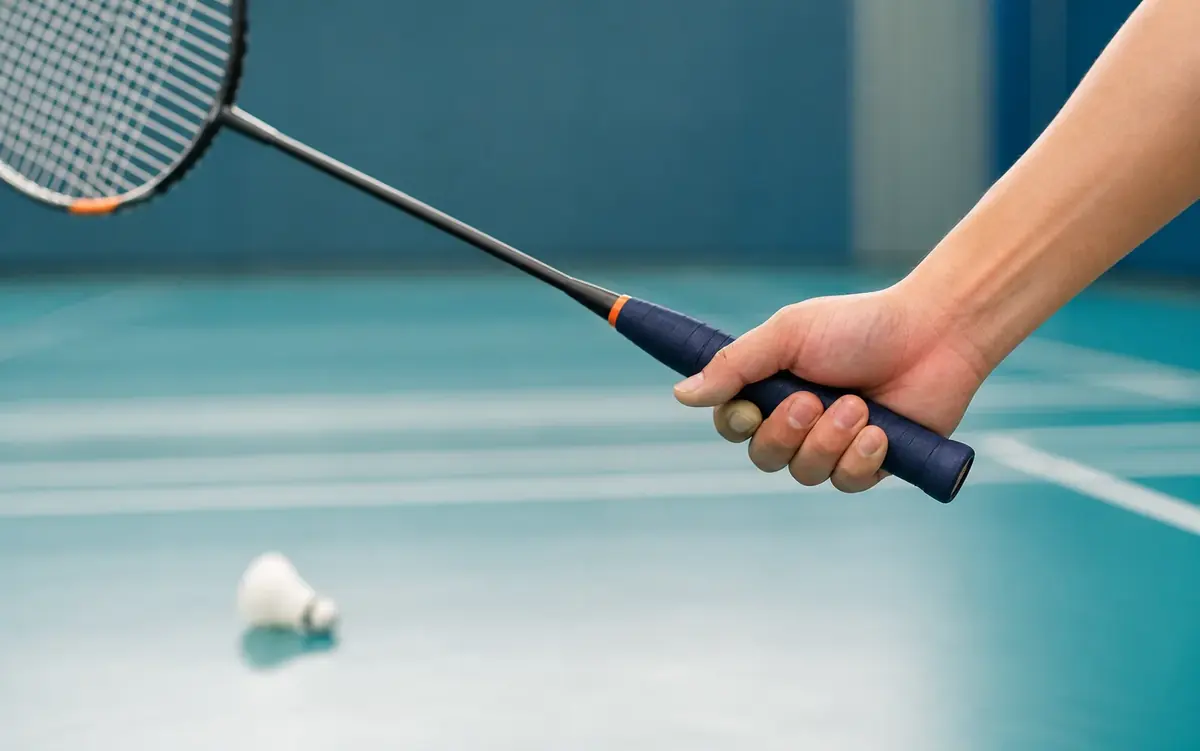
Basic forehand grip
Hold the handle as if making a relaxed handshake, with a V shape between thumb and index finger along a bevel rather than flat on the widest face.

Badminton grip for cross-court shots
Cross-court direction comes from preparation, contact position, swing path, racket-face angle, and a grip suited to the shot. Use small pressure and finger changes rather than twisting the wrist into an extreme position.
Browse all technique guidesThis guide uses source-based editorial review informed by established badminton coaching principles and relevant Badminton World Federation education material. Grip labels vary between coaching systems. Stop if you feel pain, numbness, or persistent discomfort.
Move into a position that gives you space to contact the shuttle. A useful grip cannot rescue a shuttle that has travelled too far behind you or a body position that prevents a controlled swing.
Prepare with a relaxed hand. Constant squeezing slows grip changes, restricts finger action, and can tire the forearm. Pressure can increase around contact, then release as you prepare for the next shot.
The racket face sends the shuttle along the direction present at contact. Grip pressure and finger action help control that face, but the swing path, forearm rotation, body position, shuttle height, and contact point also contribute.
Cross-court overheads, drives, net shots, and backhand actions do not use one universal grip. Learn the foundation for each stroke, then add a small directional adjustment while keeping a safe range of motion.
Hold the handle as if making a relaxed handshake, with a V shape between thumb and index finger along a bevel rather than flat on the widest face.
Place the thumb against a broad bevel to support many backhand actions in front of the body. The exact position changes with shuttle height and swing direction.
Move between the basic forehand and full thumb positions for situations where the contact sits beside or behind the ideal backhand position.
A handle that finishes too large can limit finger movement and encourage a tight hold. A handle that feels too small may prompt squeezing or excessive grip build-up. Replacement grips and overgrips change the finished size, shape, cushioning, and balance.
Grip codes on rackets do not describe technique. G4, S2, and similar labels may come from different manufacturer systems, and they should not be treated as interchangeable. Judge the finished handle in your hand after accounting for the grip material you use.
Replace a grip that becomes slick, torn, compressed, or difficult to hold without extra pressure. Keep the handle dry and change an overgrip before sweat compromises control.
Rest the handle across the fingers rather than burying it in the palm. Leave enough space for the fingers to close and guide the racket. The exact gap depends on hand size and the finished handle.
During preparation, hold with enough pressure to keep the racket stable. Increase finger pressure through the final part of the action when the shot requires it, then relax during recovery. The change should remain small and coordinated with the stroke.
A hard squeeze from the start can reduce racket-head movement and make late grip changes difficult. If your forearm burns during a low-intensity drill, pause and check whether you are gripping throughout the swing.
Finger control does not mean flicking the racket with an isolated joint. Coordinate the fingers with forearm rotation, arm movement, and body position appropriate to the shot.
Begin near a basic forehand grip and move behind the shuttle. Contact high enough to choose between straight and diagonal directions without reaching across the body at the last moment.
Keep the early preparation similar for both directions. Select the cross-court path before the final forward action, then coordinate forearm rotation, finger pressure, and the racket face. An exaggerated late wrist turn can send the shuttle wide and place the joint in a poor position.
For a cross-court clear, the shuttle needs enough height and length for its longer diagonal route. For a drop or smash, the required face angle and swing speed differ. Do not copy one final grip position across all three strokes.
Practise the straight option first, then alternate directions from the same feed. Use broad targets and confirm that contact stays in front. Reduce speed if the directional change causes balance to fail.
A backhand overhead may use a bevel position rather than a full thumb grip, especially when the shuttle has travelled behind the ideal contact point. Coaching labels differ, so identify the thumb position, handle bevel, contact point, and swing direction rather than relying on the label alone.
Move early enough to create space. Use the thumb and fingers to support the final acceleration while coordinating forearm movement. Avoid forcing the wrist backward or sideways to manufacture a diagonal angle.
Develop a controlled straight backhand action before adding cross-court direction. The diagonal route is longer for a clear and demands enough timing and length. A short attempt can expose the front or middle of your court.
For a backhand drive in front of the body, a thumb-based grip may support a compact action. Contact in front, use a small racket-face change, and recover the racket to a ready position. The drive should not copy the larger preparation of an overhead clear.
Approach the shuttle with the racket prepared in front and the hand relaxed. Reach with a stable lunge so the racket can meet the shuttle near net height where possible.
Use a grip suited to the forehand or backhand side. Make a small change in face angle and finger pressure to send the shuttle diagonally. Large wrist movement can reduce control and make the direction obvious.
Aim for a generous cross-court area at first. The shuttle should clear the tape and descend toward the opposite front court. A shot that travels too high gives the opponent time to attack, while a forced attempt from below net height may not support a tight trajectory.
Recover from the lunge after contact and prepare for a straight push, lift, or net reply. The cross-court route leaves space on the side you played from, so court position matters as much as the grip.
Similar preparation can make straight and cross-court options harder to read, but the shot still needs a timely contact point. Do not hold the racket back or wait until the shuttle falls to create a dramatic change of direction.
Use the same approach and early racket position, then make the required face and pressure adjustment near the normal contact phase. The adjustment should remain within the stroke's safe and controlled range.
Practise direction before disguise. A repeatable straight shot and a repeatable cross-court shot give you a foundation for using the same preparation. Adding concealment to an unstable stroke usually creates more errors.
Start without a shuttle. Move between basic forehand, bevel, and thumb positions while keeping the hand relaxed. Check the grip from the palm side and the back of the hand. A mirror or a stationary camera can reveal whether the thumb and index finger stay in the intended place.
Add shadow swings for one shot type at a time. Rehearse straight and cross-court directions with the same early preparation. Finish each action in balance and return the racket to a ready position.
Use slow, controlled feeds. Begin with forehand overhead shots toward broad straight and diagonal targets. Move to backhand drives and net shots in separate drills so each contact point remains clear.
Alternate directions after you can reach each target without squeezing. Ask the feeder to call the target before the forward swing. Later, use the feeder's position as the cue so you practise a tactical choice rather than a memorised pattern.
Progress to conditioned rallies with one or two permitted cross-court situations. Reduce the pace when the grip becomes rigid, contact moves behind you, or the racket face changes through a late wrist twist.
Return to the foundation for the specific overhead, drive, net, or backhand action before adding cross-court direction.
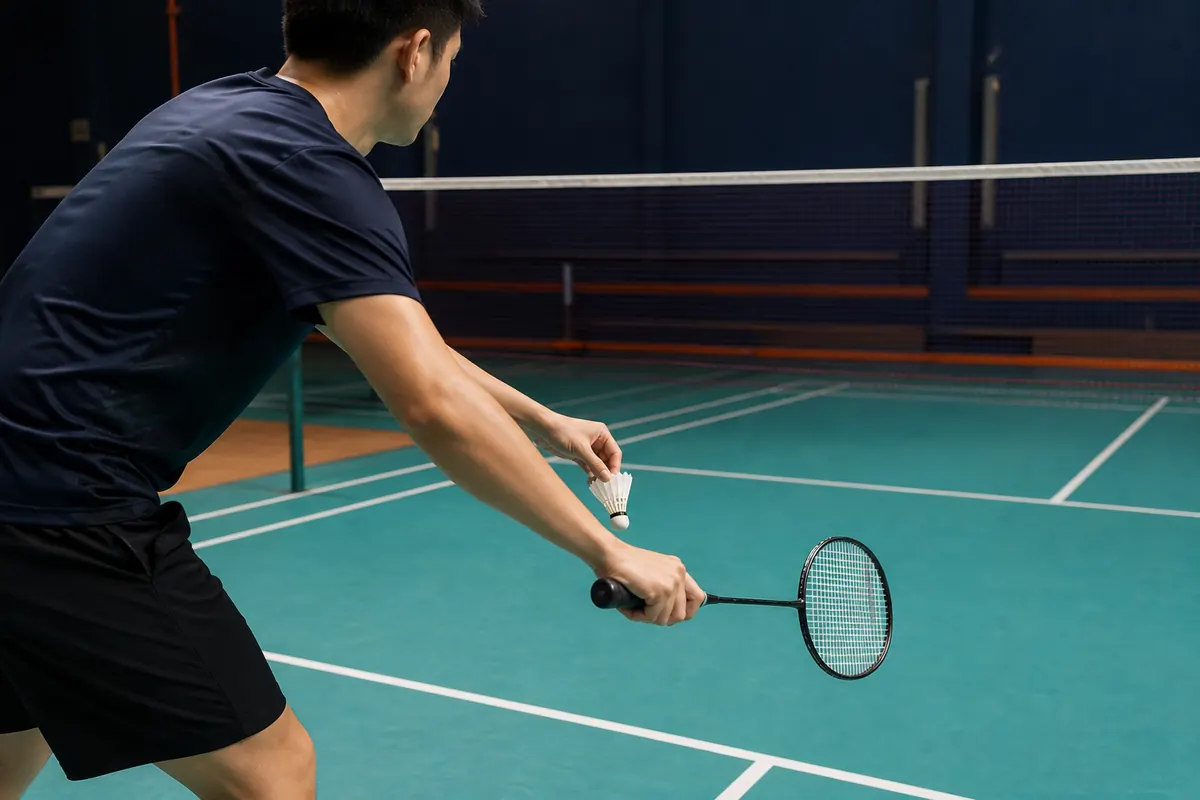
Reduce preparation pressure and practise a small squeeze-and-release pattern without a shuttle.
Reset the grip, move earlier, and create direction with coordinated finger, forearm, face, and swing-path changes.
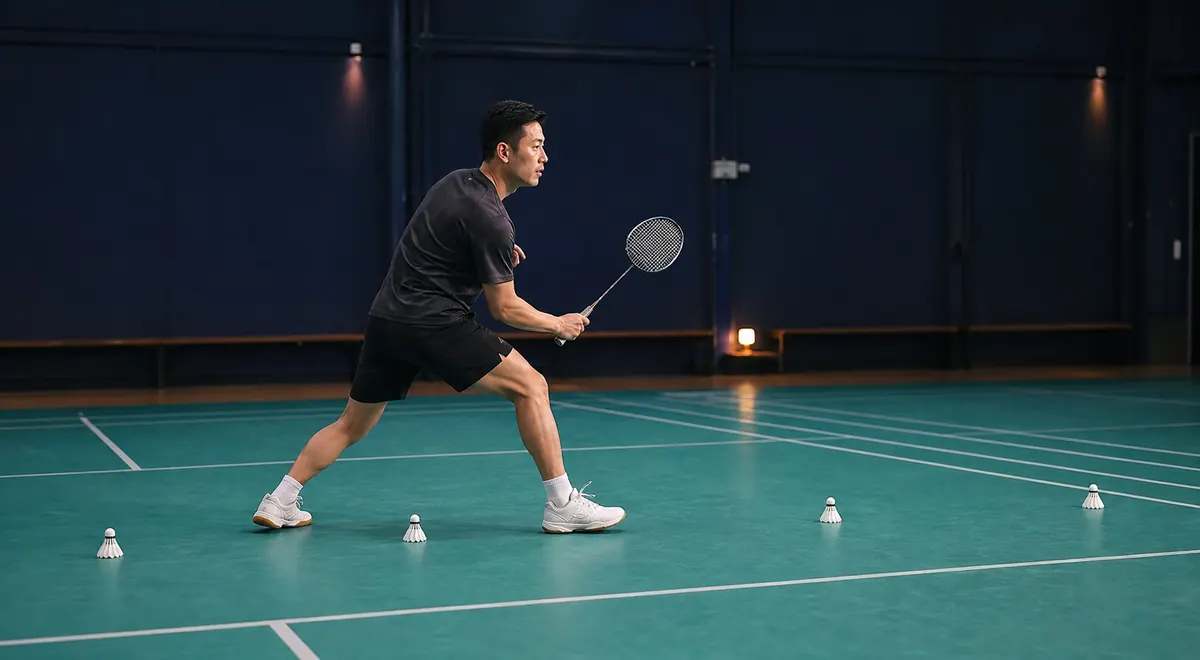
Improve movement and use a safer direction. Grip changes cannot restore options that late positioning removed.
Include the first recovery step in the drill and prepare for the open straight reply.
Stop. Seek qualified assessment if symptoms persist, recur, or affect normal movement.
Primary references
Technique and equipment terminology is checked against the Badminton World Federation Shuttle Time programme and the current BWF Laws of Badminton. These are document sources, not a claim of individual coaching review.
Attacking and defensive cross-court clearsApply grip control to clear trajectories, tactical choices, court targets, and recovery. Badminton technique libraryReturn to the guide hub for a broader learning order.
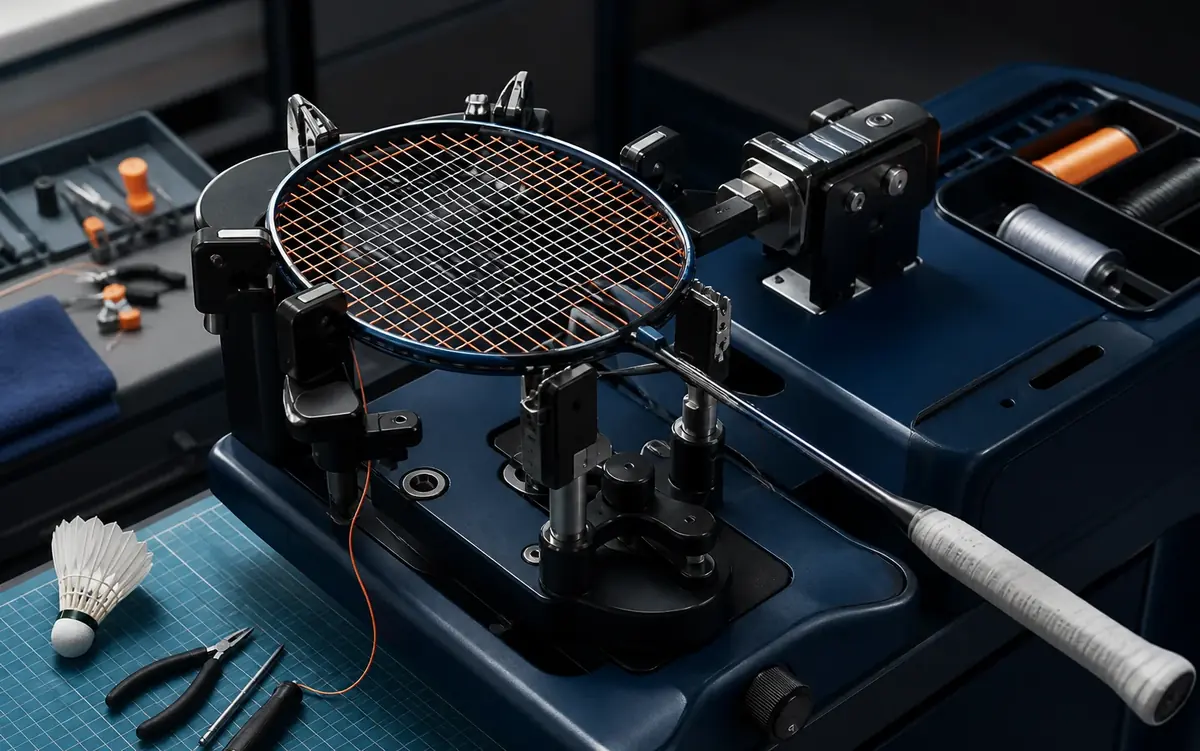 Apacs Dual Power & Speed unstrung guideReview how final handle build-up and string setup affect a racket assessment.
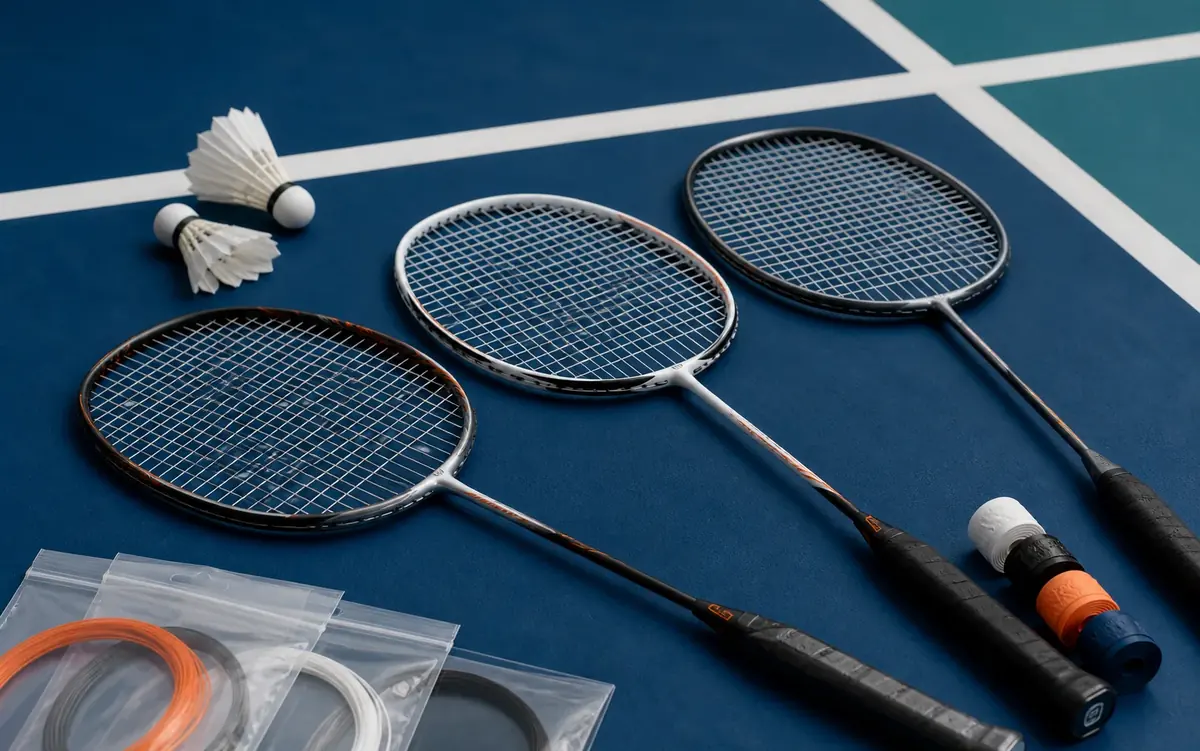 Li-Ning SS 68 G4 racket guideSee why model codes such as G4 and S2 must remain separate from technique terminology.
 Editorial policyRead the standards for technical guidance, sources, reviewer claims, and corrections.