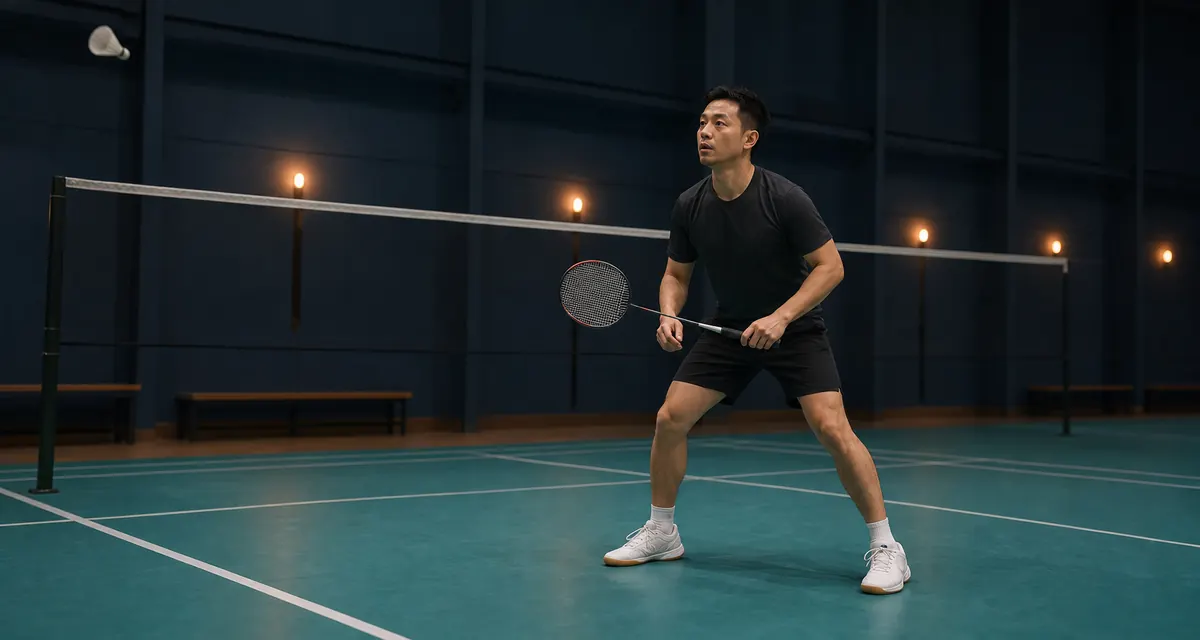
Shadow movement
Move from base to the rear court, rehearse the reach and rotation, then recover. Keep the final steps adjustable rather than memorizing one stride pattern.

Forehand clear technique
A forehand clear sends the shuttle high or flat toward the opponent’s rear court. The useful result comes from early movement, a contact point in front of the hitting shoulder, a relaxed acceleration, and recovery—not from forcing the wrist.
Browse all technique guides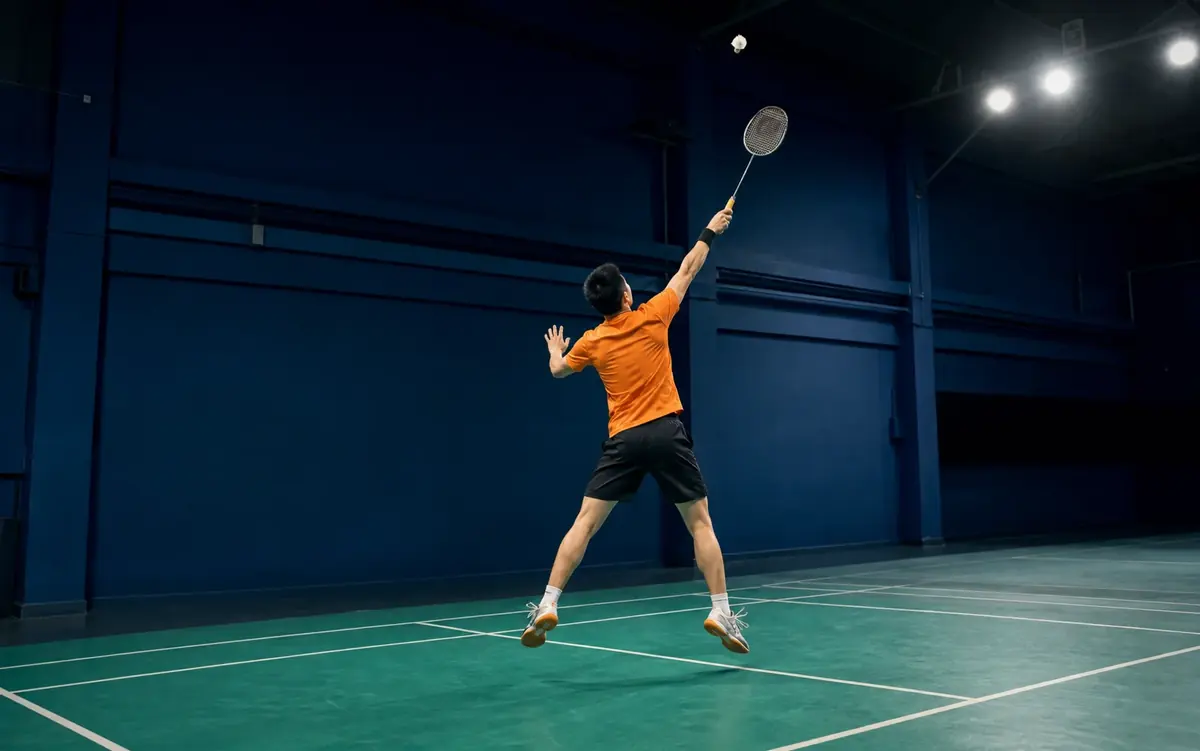
Move behind the shuttle, turn side-on, prepare with a relaxed grip, contact the shuttle high and slightly in front, direct the racket face toward a large rear-court target, and recover as soon as the shuttle leaves the strings. Start with a high clear before trying a flatter attacking flight.
Use a split step as the opponent strikes. Turn the hips and shoulders, then travel toward the rear court with adjustment steps. Your goal is to arrive balanced with space between the body and racket arm. When the shuttle is already behind you, choose a safer recovery shot instead of forcing a full clear.
Use a basic forehand grip and keep finger pressure light during preparation. Raise the non-racket arm to help judge the falling shuttle and organize the shoulders. The racket arm bends naturally; it does not need to be pulled into an extreme position.
Rotate through the shot and reach upward so the shuttle is contacted above and slightly in front of the hitting shoulder. Accelerate into contact by combining body rotation, forearm rotation, and a brief squeeze of the fingers. A forced wrist snap is neither the goal nor a useful safety cue.
A high defensive clear buys recovery time and should travel deep enough to move the opponent behind the base position. A flatter attacking clear travels faster but gives you less time if it is intercepted. Learn depth with a generous target inside the back and side boundaries before aiming close to a line.
Let the racket decelerate naturally, land in balance, and move toward a base position that reflects your shot quality and the opponent’s likely contact point. A clear is incomplete if the follow-through leaves you unable to cover the next reply.
Move from base to the rear court, rehearse the reach and rotation, then recover. Keep the final steps adjustable rather than memorizing one stride pattern.
Use predictable feeds and aim into a broad rear-court zone. Count balanced contacts and useful depth before increasing pace.
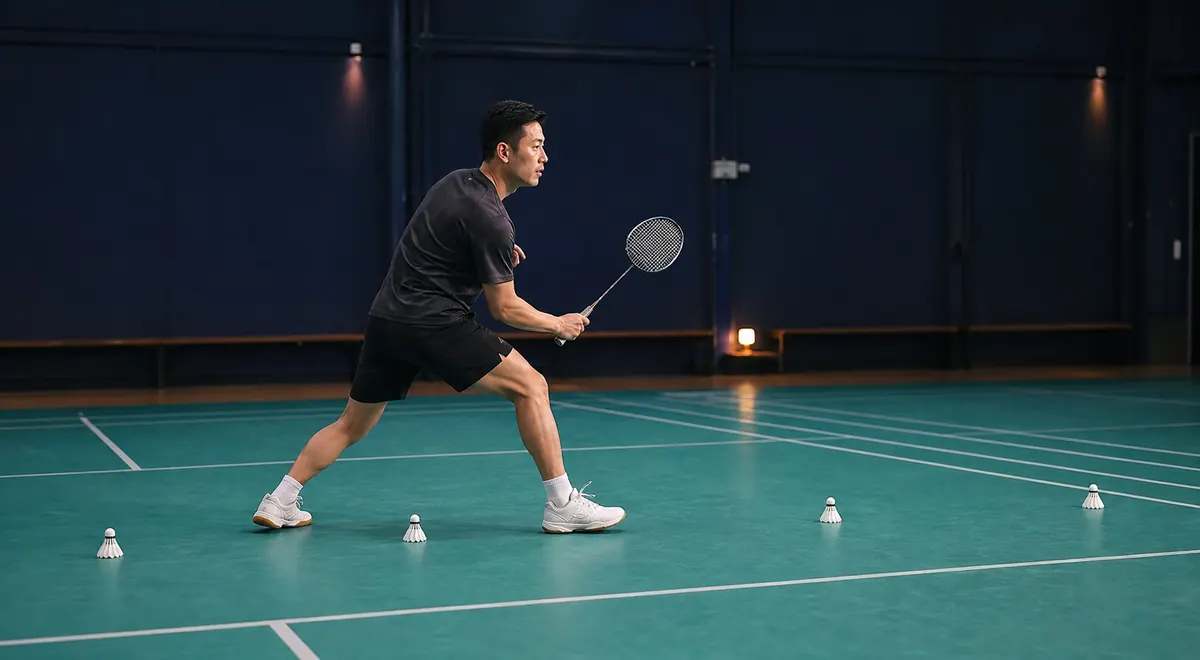
Link each clear to recovery and a second movement. Reduce the pace if technique or balance deteriorates.
A short clear often begins with late movement, contact behind the body, an open racket face, or tension throughout the swing. Inconsistent direction often comes from changing the grip during the forward swing or turning the racket face at the last moment. Loss of balance usually signals that the player reached instead of making another adjustment step.
Warm up, increase repetitions gradually, and stop if the motion causes pain. This source-based guide does not replace in-person coaching, medical advice, or an assessment of your mobility and workload.
Primary references
Movement and teaching terminology is informed by the BWF Shuttle Time teaching programme. Court, shuttle, and racket terms follow the BWF Laws of Badminton. Dribon has not represented this page as a named coach’s review.